Exploring Nut and Bolt Production Techniques
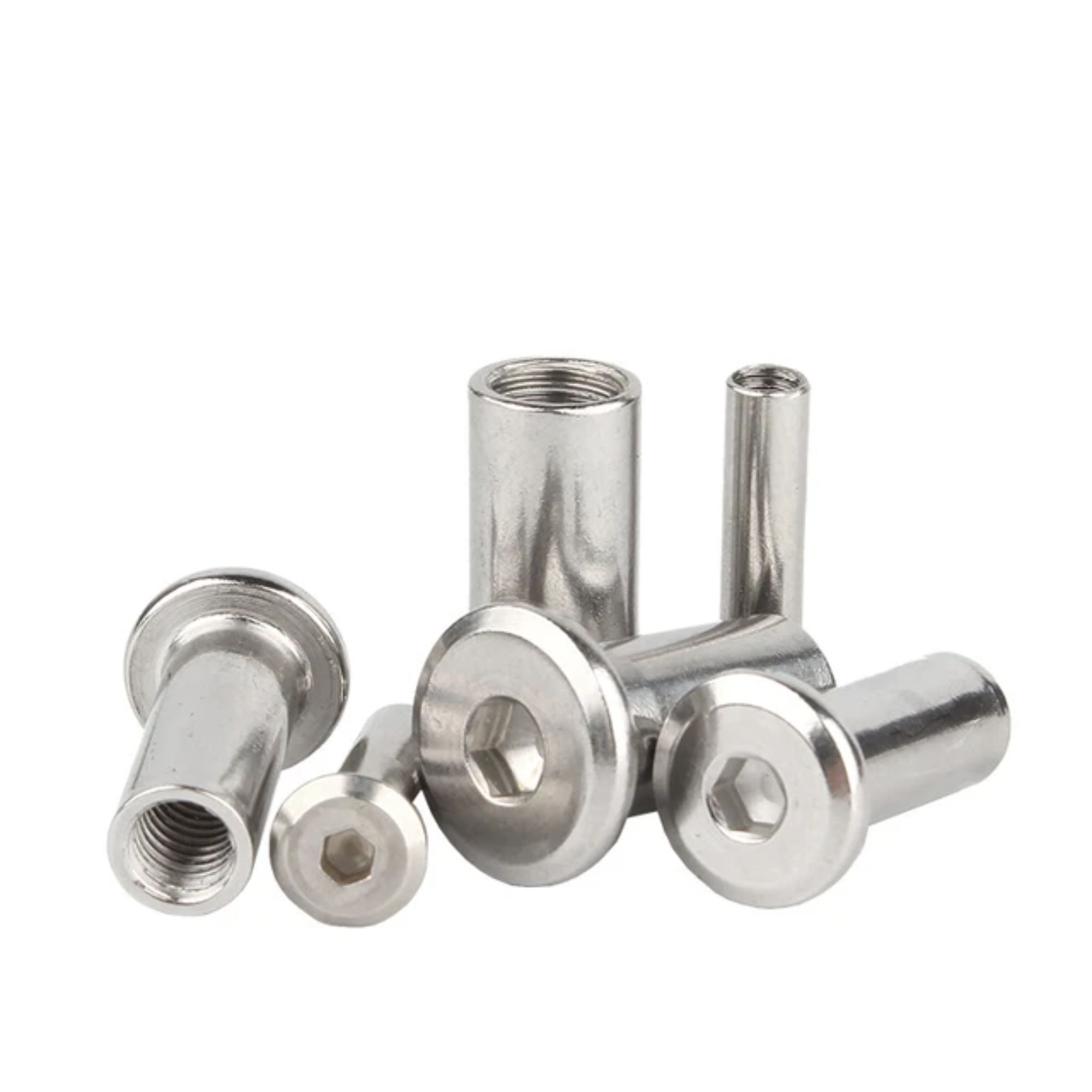 If you have ever taken a close look to the nut at home or bolt, what are they. These little guys are very important, they keep things in place! They can be found almost anywhere from furniture to cars for studying nuts and bolts. However, you know how nuts and bolts are manufactured? In reality, it is a quite complicated process that has many layers!
To begin with let's talk about the materials that can be used. Be chosen, different on the nuts and bolts used in material Steels are used to manufacture nuts and bolts, they have a high strength capability, can handle more stress as well. Heavy-duty applications BoltsSteelbyte! The remaining nuts and bolts are brass which is a shiny metal that strong enough to hold but also look good. Commonly used in decorations, jewelry and such other lovely things are brass.
After the material selection, next step will be to start From this point on with making of nuts and bolts. The initial phase is making a steel wire of identical diameter to the bolt we intend on forming The wire is afterward cut into small pieces, which are supposed to be the nuts. The Nuts wire is fed into a machine to create the bolts which are then twisted, and shaped to obtain their accurate size making them conducive for proper functioning. The importance of this forming is that every nut will fully match its corresponding bolt.
How Nuts and Bolts Are Made
Nut and Screws make appear to be magical, but they are actually a science. These are small pieces that have to be highly manufactured for such important parts of buildings and machinery. It is not known to you, but there are many steps for these small objects.
Heating the metal is a key step in nut and bolt manufacturing. This process, or heat treating of the metal requires is heating up it to a very high temperature and then cooling down again quickly. The metal is then made stronger, very important for parts that keep stuff together. Opt for more heavy duty nuts and bolts because they are less likely to break or come loose.
Threading Threading is another essential stage. Instead, the grooves on bolt are made at a later stage to screw nut easily in them. Careful measuring (or eyeballing) is required for threading. If it there is no perfect threading, it will just make the nut unseated hence inferior transit performance.
Different Methods for "Nuts & Bolts"
With advances in technology come new machines and methods that affect how we produce nuts and bolts. Now machines exist that can produce nuts and Washers bolts but immediately; anywhere in the order of seconds turning raw material to minimal finished goods. This helps maintain speed of requirements in factories where a lot of nuts and bolts are required on day to day basis.
There is a new process by one of our competitors where they say cold heading. So the material is formed with the help of machine without warming it initially. Some jobs require nuts and bolts that have a triangle or hexagonal shape, cold heading is the answer to your problems. The design possibilities of this method are vast and can be very handy for varied applications.
Electrochemical machining is another unique method. It involves an electric current being used to chemically machine away a piece of metal. This makes specialized nuts and bolts of individual shapes/sizes - which, in turn are often required for fields like aerospace engineering. Aerospace requires precision, so this method is used to ensure each piece aligns as intended.
One more type of techniques that is applied to produce a bolt and nuts like hot forging method. That is, a metal gets hot enough to nearly melt then it will be formed into the chosen shape. Most of the nuts and bolts used on construction projects are made this way, as they have to be very strong. Strong, Reliable Fasteners are Critical for Large Structures
Trends and New Ideas
Due to the changes in technology over decades, nut and bolt manufacturing trends are also changing. For example, with the growing concerns over environmental issues, some nuts and bolts are made from recycled steel. This helps with the trend of going remind recyclable materials/ reduce waste that is catching on.
The second trend for 3D printing is coming in the form of screws and nuts. Which leads to a 3D-printing (mass produced pattern) as the earliest digital form of manufacturing where you create an object with its 3d design on computer and then it is been made layer by layer in printer. This method provides very accurate shapes in all sizes and is suitable for small scale production. This is especially useful for one-off, low-volume production parts.
That was it: nuts and bolts are far more complicated than we might anticipate. With countless steps from choosing the perfect alloys and hating them correctly, to entirely new methods such as electrochemical machining or even 3D printing, creating these little guys has certainly become a job on their own. So the next time you look at a nut or bolt Think about what went in to making that! Now with the future of making nuts and bolts - who knows what new ideas and technologies will take place.


Comments
Post a Comment